Innovating
Innovation isn't about following trends -it's about seeing what's necessary before it becomes obvious.
In 2017, I created one of the world's first AI coaches, long before artificial intelligence became mainstream in the learning space.
For over two decades, I pioneered learning transfer methodologies, refusing to accept the gap between what people learn and what they actually do differently. That same drive to innovate now shapes how I help organisations navigate AI transformation - not just the technology, but the human shift underneath.
Innovation isn't a department or a strategy; it's a refusal to settle for what already exists when something better is possible.
Experimenting
At 30, I made a bold experiment.
Fresh from a transformative training programme, I bought a one-way ticket to Australia and gave myself one year -twelve months to create the beginnings of a new business, or return to the UK knowing the experiment had failed.
Twenty-three years later, I'm still here. That willingness to experiment, to test ideas in the real world, to risk being spectacularly wrong for the possibility of breakthrough -it's become the foundation of everything I do.
The best experiments aren't about guaranteed outcomes; they're about courageous curiosity and the willingness to put skin in the game.
Strategising
In a world that celebrates speed, I've learned the power of slowing down.
Real strategy isn't about doing more, faster -it's about creating clarity on what truly matters and then executing with precision. My ability to step back, reflect deeply, and design strategies for optimising human performance has enabled individuals and organisations to achieve results they didn't think possible.
The executives and organisations I work with don't need more information; they need the courage to pause and ask what actually moves the needle.
Strategy emerges in the space between reaction and response, in the disciplined pause where clarity lives.
Creating
I arrived in Australia knowing three people. No network, no safety net -just ideas and determination.
From that blank canvas, I built a thriving business, developed products and services that have impacted thousands, and created one of the world's first AI coaches.
But creation isn't just about the big moments -it's a daily practice of showing up to the blank page, the impossible problem, and asking: what wants to emerge here?
Every creation expands what you believe is possible. Every new offering stretches your thinking. The power goes beyond the outcome; it's in the act of bringing something into existence that wasn't there before.
Coaching
Here's what most people get wrong about coaching: it's not about advice. It's not about fixing. It's about creating the conditions for someone to access their own wisdom and then actually do something different.
I've been coaching for over two decades - and I'll probably be coaching on my deathbed. Early on, one of Sydney's top lawyers told me she was getting more value from 45 minutes with me over the phone than from 90-minute face-to-face sessions with her executive coach. She went on to work with me for years. Great coaching is the ability to ask the question that changes everything.
The business I founded delivered over 24,000 coaching conversations across 12 languages and 16 countries, and in 2017 I created one of the world's first AI coaches - years before the technology went mainstream.
That depth of experience is what I bring to my work now: a deep understanding of why people resist change, why knowing isn't doing, and what it actually takes to shift behaviour - especially when AI is reshaping the ground beneath us.
Mentoring
Mentoring is how wisdom compounds, how you multiply your impact beyond what you can do alone.
Over the years, I've mentored coaches across the globe, enabling them to deliver exceptional results for corporate clients and transform training investments into measurable performance gains.
But mentoring isn't just about teaching techniques -it's about passing on the hard-won lessons from two decades of getting it wrong before getting it right, showing people the shortcuts and the traps no one else will tell them about. Your story -your actual lived experience, failures included -is often the most powerful curriculum you possess.
Speaking
A keynote isn't just a presentation -it's a moment to collectively explore bigger possibilities.
I've stood on stages from Singapore to San Diego, delivering sessions that shift how people think about learning, performance, and change.
As a repeat presenter at the Association of Talent Development (ATD) International Conference, I've learned that the power isn't in what you say. It's in what you make people feel brave enough to do next.
Speaking is where ideas come alive, where you take concepts trapped in our head and they become action in someone else's world. The best talks give people language for something they felt but couldn't articulate. They permission them to try what they've been too afraid to attempt.
Writing
Writing is thinking made visible. It's how you take messy, half-formed insights and forge them into something solid, shareable, something that outlives the moment.
My first book, Turning Learning into Action, was published by Kogan Page in 2014. Since then I've co-authored Making Change Work (Kogan Page, 2016) and Designing Virtual Learning for Application and Impact (ATD Press, 2023).
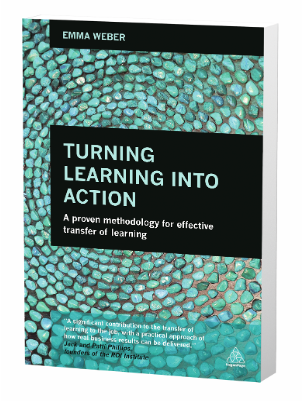
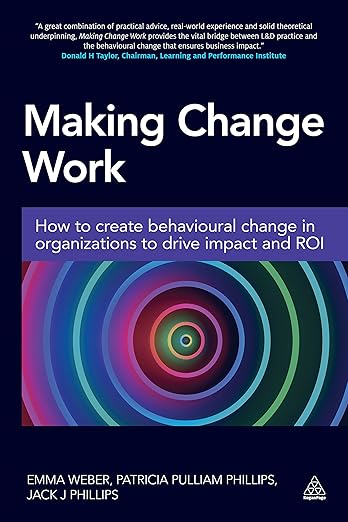
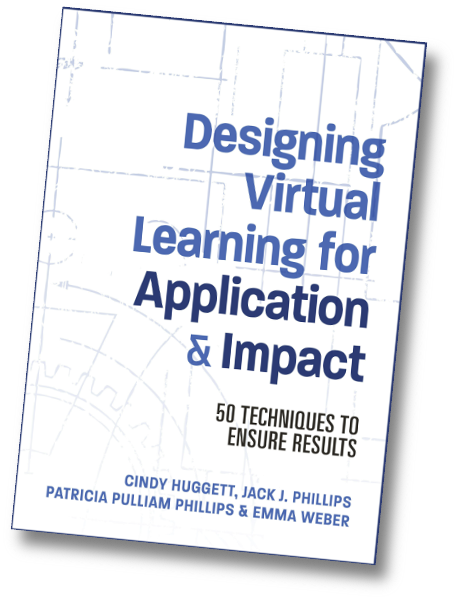
My work has also been featured in academic textbooks and industry handbooks, including chapters in ATD's Handbook for Measuring and Evaluating Training, ATD's Handbook for Training and Talent Development, and Data & Analytics for Instructional Designers, as well as a co-written chapter in Foundations of People Metrics and Analytics.
Writing allows me to codify what I've learned, to share it beyond the moment, and to contribute to the collective wisdom of our profession.
Singing
When I moved to Australia, consumed by building a business and finding the love of my life, I realised everything had purpose, everything had stakes. I could feel myself disappearing into productivity.
So I joined the Purple Moon Choir on Sydney's Northern Beaches and remembered what it means to do something for absolutely no reason except fun. No ROI, no performance metrics -just the voice and sheer pleasure of hearing people sing together.
Singing is my rebellion against the tyranny of usefulness. It's where I go to remember that being human isn't about optimising -it's about experiencing.
The moments that feed your soul rarely make it onto your resume. Do them anyway.
Being Human
As we enter an era of unprecedented technological change, being human is becoming both more challenging and more essential.
AI will rewrite work, relationships, and creativity itself.
And in the middle of this transformation, the most valuable skill won't be technical prowess -it will be the courageous, messy, magnificent act of being fully human. Not the sanitised professional version, but the whole version -vulnerable, empathetic, connected, real.
I've spent my career at the intersection of human potential and technological possibility, and I'm convinced: the future belongs to those who can harness innovation while remaining deeply, authentically human.
Embodying our humanity isn't a soft skill -it's the core skill that will determine our effectiveness, our fulfilment, and our legacy.